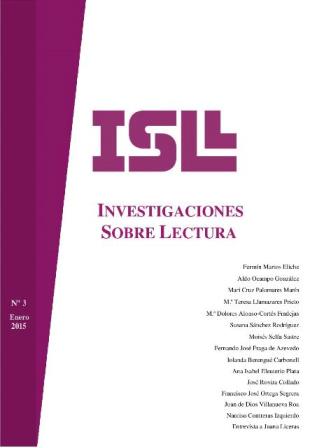
Monólogos humorísticos televisivos en la clase de español como lengua extranjera: Herramientas de aprendizaje
DOI:
https://doi.org/10.24310/revistaisl.vi3.11078Keywords:
Discurso, Español como Lengua Extranjera, humor y aprendizaje, inteligencia cultural, monólogos en televisiónAbstract
El estudio que presentamos pretende añadir una visión interdisciplinar del uso de un tipo de discurso muy extendido en nuestra sociedad que ejemplifica muy adecuadamente la llamada inteligencia cultural: el monólogo. Se trata de acercar al estudiante de español de niveles avanzados a elementos subyacentes -difícilmente explicables- de los diferentes niveles lingüísticos y culturales del español a través de los monólogos humorísticos que aparecen en televisión. Analizamos la importancia del humor y de la inteligencia cultural en estos
monólogos, haciendo hincapié en lo que llamamos minimonólogos y su utilidad en la enseñanza del español como lengua extranjera, pues en ellos confluyen los más diversos elementos culturales de la lengua, lo que permite al estudiante acercarse a la realidad a la vez que se divierte durante el proceso educativo.
Downloads
References
Downloads
Published
Dimensions
Citations




Issue
Section
License
All contents published in Investigaciones sobre Lectura are protected under the Creative Commons Attribution-NonCommercial-ShareAlike 4.0 International (CC BY-NC-SA 4.0) license. All about this license is available in the following link: <http://creativecommons.org/licenses/by-nc-sa/4.0>
Users can copy, use, redistribute, share and exhibit publicly as long as:
- The original source and authorship of the material are cited (Journal, Publisher and URL of the work).
- It is not used for comercial purposes.
- The existence of the license and its especifications are mentioned.
There are two sets of authors’ rights: moral and property rights. Moral rights are perpetual prerogatives, unrenounceable, not-transferable, unalienable, imprescriptible and inembargable. According to authors’ rights legislation, Investigaciones sobre Lectura recognizes and respects authors moral rights, as well as the ownership of property rights, which will be transferred to University of Malaga in open access. The property rights are referred to the benefits that are gained by the use or the dissemination of works. Investigaciones sobre Lectura is published in an open access form and it is exclusively licenced by any means for doing or authorising distribution, dissemination, reproduction, , adaptation, translation or arrangement of works.
Authors are responsable for obtaining the necessary permission to use copyrighted images.




31.png)