
Journal of Technology and Educational Innovation Vol. 11. No. 2. December 2025 - pp. 25-41 - ISSN: 2444-2925
DOI: https://doi.org/10.24310/ijtei.112.2025.21175
Future Mathematics Teachers’ Perceptions of Using ChatGPT in the Classroom
 Esta obra está bajo licencia internacional Creative Commons Reconocimiento-NoComercial-CompartirIgual 4.0.
1. INTRODUCTION
Artificial intelligence (AI) is a common product of advances in computer, machine and information communication technologies and is a technology that allows technological tools to perform human-like actions (Chen et al., 2020). These platforms have the potential to present information in various formats to users by using a data repository. These technologies are believed to have the potential to change approaches and common practices in education (Mhlanga, 2023). With the growing popularity of AI systems, researchers are increasingly focusing on how these technologies can be used in education. This popularity is partly driven by factors such as more students achieving targeted learning outcomes and improved access to supportive teaching resources when needed (Ahmad et al., 2021; Wang-Kin, 2021; Zhang & Aslan; 2021). In this respect, Mohamed et al. (2022) stated that the use of AI in teaching can turn the learning process more interactive for students.
ChatGPT (OpenAI, n.d.) is one of the promising AI technologies that can perform human-like dialogs due to its natural language processing capability (lim et al., 2023). It operates on a huge quantity of data, therefore can compose appropriate feedback based on the user input. The platform operates on the basis of complex algorithms to compose accordant output for users’ demand, and it is constantly evolving based on its interaction with users, which causes it to turn into a more capable form (Mhlanga, 2023).
By using a documentary analysis approach, Mhlanga (2023) addressed the question of what future and current effects that ChatGPT offer in the field of education. One of the effects reported was that ChatGPT offers the opportunity to create intelligent tutoring systems where students can experience individualized learning. In this respect, the software can increase the participation of students by determining their knowledge deficiencies from the inputs provided by them, and then shaping the teaching process as necessary. In addition, he emphasized that the software has the function of suggesting learning materials to students, taking into account their learning priorities and interests. In this respect, he stated that ChatGPT can optimally adjust the limits of the content and the speed of presentation of information, without causing mental burnout, by monitoring the development of students throughout learning process. Chung (2023) summarized the possible contributions of ChatGPT, mentioned by educators in the literature, to students as finding answers to problems, summarizing information, facilitating collaboration, an auxiliary tool in preparation for exams, drafting assistance and providing feedback. In another study, Castillo et al. (2023) investigated the experiences of Peruvian university students about ChatGPT. The findings of the study showed that students thought that the responses provided by ChatGPT are accurate and it has a user friendly interface. As a result of this positive attitude, it has been determined that the software is widely used among students as an auxiliary tool in completing their homework and comprehending difficult-to-understand content. Besides students, ChatGPT also has the potential to support educators. As a result of his literature review, Chung (2023) reported that educators utilized ChatGPT to develop course materials, decide how to approach students with special needs, perform language translation, prepare assessment tasks and evaluate student performance.
In addition to the potential benefits, the emergence of the software has also raised some doubts and concerns among educators. One of the main concerns is that students use ChatGPT entirely for answering exam questions —referred to as AI-assisted cheating— so that teachers do not get a sense of what students are learning (Chung, 2023; Guo & Wang, 2025). In order to avoid this undesirable situation some researchers have suggested differentiating the structure of the exams. In this regard, Zhai (2022) proposes the creation of new assessment formats that include questions that emphasize creativity and critical thinking that ChatGPT cannot handle. Choi et al. (2023) recommend instructors restricting students’ access to ChatGPT in the examinations, and also asking questions that require not only recalling but also analyzing factual knowledge. Similarly, Stutz et al. (2023) state that the exams consisting of questions belonging to the higher levels of Bloom’s taxonomy, such as analysis, may be a precaution against this issue. Another reported drawback of the software is that students can have their homework solved directly by ChatGPT without having to think about it, and this, in turn, may prevent them from acquiring the targeted competencies (Sánchez-Ruiz, et al., 2023). In addition, the fact that students use ChatGPT too often may cause them to become too dependent on ChatGPT in the problem-solving process and in accessing information, thus not developing critical thinking skills and not building self-confidence (Sánchez-Ruiz, et al., 2023). Considering all that has been said, it is seems reasonable to expect that if students constantly resort to ChatGPT to overcome the difficulties they face in the learning process, this will weaken the interaction between teachers and students and teachers will not be able to monitor students’ progress.
1.1. ChatGPT in the context of mathematics education
Published research on the use of ChatGPT in mathematics education state that the inclusion of ChatGPT in the teaching process will provide many advantages. The software is claimed to have great potential in solving mathematical problems and learning mathematical knowledge, besides, it can be used as a tool by teachers to give feedback to students and evaluate student achievement (Wardat et al., 2023). Wu (2021) argued that the introduction of AI-assisted teaching has an extremely effective on basic mathematics education and teaching. As a result of their literature review Mohamed et al. (2022) concluded that ChatGPT will make students more critical and responsible for solving everyday problems, and will allow them to better understand algebra, geometry, statistics, and helps students gain mathematical and cognitive skills. In support of these results, Sánchez-Ruiz, et al. (2023) state that ChatGPT is a tool that can help in learning mathematics, as it provides opportunities for easy access to large sets of information and extensive support in doing homework. Apart from providing answers to mathematical problems, the authors assert that the software allows students to better understand the problem-solving process as it explains step by step how to solve them as well.
To determine how ChatGPT performs on mathematical problems that differ in difficulty and content, Dao and Le (2023) examined ChatGPT’s ability on the questions that appeared in the Vietnamese national high school graduation examination. For this purpose, drawing on the Bloom taxonomy the authors divided the questions that appeared in the relevant exam into four sets: knowledge, comprehension, application and high application. A second classification was carried out for the subject area to which the questions belonged. The findings of the study showed that the success rate of the software dramatically changed with respect to both difficulty and subject area. While the success rate of the software is between 75% and 90% in the questions classified as knowledge level in the exams held between 2019-2023, it was between 0% and 22% in the questions classified as high application. In particular, the inability of the software to interpret and make sense of graphics in questions containing graphical information has caused it to not be successful in problem solving processes that require visual reasoning.
In another study Wardat et al. (2023) aimed to investigate the views of math educators based on their experience of the use of ChatGPT. Because the software can take on the role of a personal assistant, keep up with a student’s learning pace, and support the understanding of mathematical concepts, the participants of the study generally agreed that ChatGPT was very useful for students who needed help in the problem-solving process. Especially in the field of Euclidean geometry, the participants believed that the software is very competent to provide instructional guidance to students. Another shared belief among the participants was that the software is very successful in having students comprehend difficult mathematics topics in a clear way. Aside from positive features, the authors made a few caveats regarding the use of the software. They revealed that the software did not demonstrate a deep understanding regarding geometry, hence was not able to properly correct misconceptions. In addition to this, the validity of the solutions provided by ChatGPT to mathematical problems depended on a number of factors such as the quality of the input data, complexity of the equation, and the clarity of the written instructions to the system. The authors conclude that ChatGPT can be a useful instructional tool on condition that guidelines for fair usage are developed.
As it is understood from the opinions and views of the educators about ChatGPT, the software has possible positive and negative effects on the learning process and it is necessary to think about what kind of arrangements should be made on how to use the software in order to benefit from it. It seems important and an open issue to establish the necessary principles for its fair and responsible use and maximum benefit. The existing body of literature predominantly examines the advantages and drawbacks of ChatGPT in the realm of mathematics education through the lens of researchers or educators. Yet, the viewpoints of prospective teachers, who possess a degree of proficiency with such software, regarding the potential merits and drawbacks of these tools, have not been extensively explored. Consequently, there exists an unanswered query regarding the perceptions of these individuals. This study seeks to address this gap in the current literature. With this in mind, this paper examines the perspectives of pre-service mathematics teachers regarding the use of ChatGPT in mathematics classrooms.
2. MATERIAL AND METHOD
2.1. Research Design
The present study employs a qualitative descriptive methodology, as advocated by Yin (2002), to investigate the perceptions of prospective educators regarding the integration of ChatGPT in mathematics education. A structured questionnaire was administered through Google Forms to pre-service mathematics teachers in their final semester. Qualitative research methodologies are commonly utilized to gain a comprehensive insight into a specific phenomenon. Such studies have the potential to provide valuable insights that can inform educational practices, as demonstrated by Lochmiller (2016), and to elucidate the intricacies of individuals’ experiences and the underlying meanings of their actions, as highlighted by Ravindran (2019).
2.2. Participants
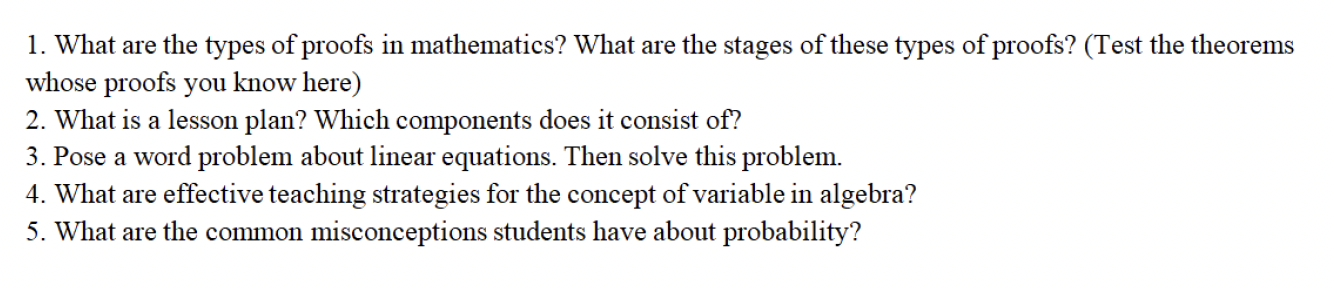
The participants of this study consisted of 72 pre-service mathematics teachers enrolled in the mathematical modelling course. Therefore, it can be stated that a purposive sampling method (Kanaki & Kalogiannakis, 2023) was employed. The researcher conducting the study, who is also the instructor for the course, implemented diverse instructional strategies to enhance the learning experience. As part of this, the first three weeks of the course were dedicated to the use of AI tools in education. In the first week, a software engineer affiliated with Amazon UK was brought in to deliver a comprehensive presentation on ChatGPT to the pre-service teachers (PTs). Subsequently, the participants were tasked with engaging in a series of activities during the subsequent two weeks. Students were asked to perform tasks, including but not limited to those in Fig. 1. The reason for giving tasks was to enable PTs to interact with ChatGPT and compare the answers they received with their existing knowledge and to develop a critical perspective towards this tool. To conclude the study, the participants were requested to complete a survey comprising open-ended inquiries aimed at eliciting their perspectives on the integration of ChatGPT within mathematics education settings.
FIGURE 1. Examples of tasks given to students
2.3. Instrument
Questionnaires are frequently employed as a method to investigate the beliefs and attitudes held by a specific subset of the population (Marshall & Rossman, 2014). The present research endeavor was undertaken to delve into the perspectives of prospective mathematics teachers regarding the integration of ChatGPT within mathematics instructional settings. To achieve this aim, a questionnaire devised by the researchers was administered to elicit and evaluate the viewpoints of these individuals. The questionnaire was disseminated using Google Forms to individuals enrolled in their final semester of pre-service mathematics teacher education. The questionnaire comprised open-ended inquiries designed to uncover various insights, including the likelihood of candidates incorporating ChatGPT into their teaching practices, their reflections on its potential benefits and drawbacks, as well as the anticipated impact on the traditional role of the teacher. For a selection and the purpose of each questions, please refer to Appendix 1.
2.4. Data Collection and Analysis
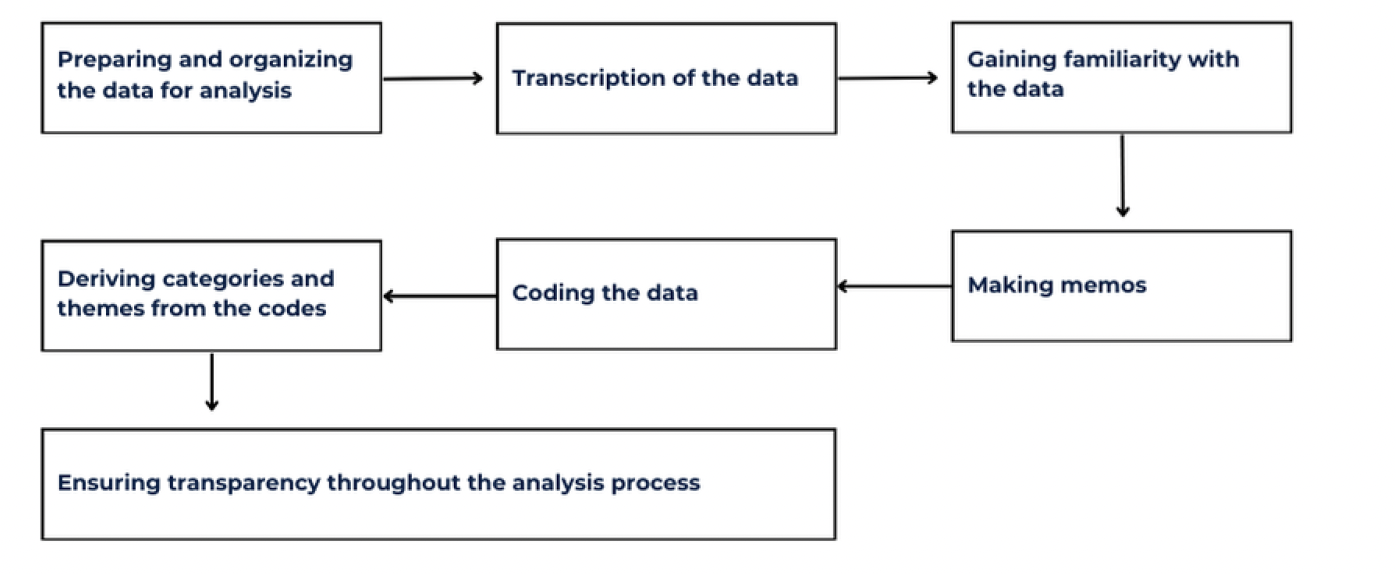
The process of qualitative data analysis is characterized by its non-linear and iterative nature, leading researchers to refrain from adhering to a strictly sequential analytic procedure (Lester et al., 2020). In response to the inherent complexity that can ensue from this approach, Lester et al. (2020) have proposed a structured methodology comprising seven distinct phases. These phases encompass initial tasks such as data preparation and organization, transcription of data, gaining familiarity with the data corpus, making memos, coding the data, deriving categories and themes from the coded content, and ensuring transparency throughout the analysis process (see Fig. 2). In the present research, the methodology employed by the researchers for data management involved aforementioned approach. Initially, the data collected through Google Forms was structured and transcribed into Microsoft Word. Subsequently, the researchers engaged in multiple independent readings of the compiled data to gain a comprehensive understanding. To facilitate a preliminary comprehension of the dataset, an initial analysis was conducted by the researchers prior to embarking on an in-depth examination. During this phase, provisional codes were formulated to categorize the data. Subsequently, with the aid of memos, the process of coding the data commenced. This phase entailed linking statements within the dataset to specific codes, thereby enabling the derivation of overarching themes from the textual passages. At the conclusion of this phase, data coding commenced with the aid of memos. During this process, textual statements were systematically linked to specific codes, and overarching themes were derived from these coded segments. The analysis of the gathered data was conducted through the application of constant comparative analysis, as outlined by Merriam (1998). Initially, each researcher independently scrutinized the data to pinpoint recurring patterns and themes. Subsequently, a collaborative session was held where the two researchers deliberated on their individual analyses, compared their findings, and collectively honed in on the principal areas of growth that surfaced from the identified common themes.
FIGURE 2. The seven steps in the Analysis of the Data
3. Results
PTs’ responses were grouped under three headings: advantages, disadvantages, and possible classroom applications of ChatGPT.
3.1. Advantages of the Use of ChatGPT
The statements of pre-service mathematics teachers regarding the advantages of using ChatGPT emerged under five themes: enhancing the learning experience, facilitating the teacher’s responsibilities, increasing student motivation, providing access to information, and improving student performance and skills. Codes related to the themes are summarized in Table 1.
TABLE 1. PTs’ views on the advantages of the use of ChatGPT
| MAJOR THEMES | MINOR THEMES | CODES |
| Enhancing the Learning Experience | Content diversity and richness |
|
| Personalized learning |
|
|
| Facilitating the teacher’s responsibilities | Providing materials and resources |
|
| Time saving |
|
|
| Increasing Student Motivation | Making lessons interesting |
|
| Opportunity for interaction and feedback |
|
|
| Providing Access to Information | Fast and easy access to information |
|
| Improving Student Performance and Skills | Presenting different perspectives |
|
| Deepening students’ thinking skills |
|
As can be seen in Table 1, PTs who refer to enhancing the learning experience emphasize the enrichment of content and personalized learning. For example, the statement of PT60 coded PT in the context of advantages is as follows:
I think ChatGPT can be used to prepare an effective learning environment because it can offer students the opportunity to progress according to their own learning pace, regardless of time, and guide them accordingly. Thus, the learning process can become more effective and efficient.
Another advantage that PTs point out is that ChatGPT will facilitate the teacher’s work in the classroom. In this context, some of the responses mentioned the contribution in terms of time, while others emphasized the support in terms of materials and resources. In this sense, PT11 asserted that:
ChatGPT provides teachers with access to different activities, instructional games, assessment, and evaluation tools. Through ChatGPT, teachers can access information quickly instead of scanning various articles or theses. ChatGPT helps teachers in designing activities, using materials, the lesson planning process and learning about students’ possible misconceptions during the teaching process.
According to some PTs, another benefit of ChatGPT is that it increases students’ motivation. Accordingly, while ChatGPT has the potential to increase student motivation with its innovative approach, the reasons for the increase in motivation were attributed to making the lesson interesting. In addition, some of the participants stated that ChatGPT provides easy access to information, which they perceived as an advantage.
3.2. Disadvantages of the Use of ChatGPT
Six themes emerged from the statements of pre-service mathematics teachers regarding the disadvantages of using ChatGPT: prevention of thinking, ethical issues, social isolation and communication impediments, lack of reliability and data accuracy, social and psychological harm, and workforce implications. Table 2 (in next page) summarizes the codes related to the themes.
The responses from the PTs showed that they thought that one of the biggest disadvantages of ChatGPT is its potential to hinder thinking. In this context, some responses point out that ChatGPT may make learning more challenging by providing students with pre-packed knowledge, while other responses suggest that it may encourage student laziness. For example, teacher PT24 stated that:
I think that such applications in mathematics education can cause laziness, especially because they accustom the student to ease. After using such applications, the student may move away from learning by doing and experiencing, which is the most effective learning method.
Some PTs believe that ChatGPT will have a negative impact on students’ homework. The biggest reservation of the participants who think so is that the purpose of the assignments will not be fulfilled. For instance, PT31 highlighted that:
By using this application in the assignments given by the teacher, they can do their homework without making any effort and potentially distracting themselves from the purpose of the assignment. In this case, students may have difficulty reinforcing what they have learned.
In the realm of mathematics education, participants expressed concerns regarding the potential negative impact of AI on students’ mathematical thinking. For instance, PT15 articulated the following viewpoint:
If students see ChatGPT as a helper to hold their hands every time they are in trouble, it may even be harmful, let alone beneficial. This is because students’ mathematical thinking could be hindered, and their intellectual development could be compromised as a result.
TABLE 2. PTs’ views on the disadvantages of the use of ChatGPT
| MAJOR THEMES | MINOR THEMES | CODES |
| Prevention of Thinking | Free-riding |
|
|
||
| Encouraging laziness |
|
|
| Negative effects on student homework |
|
|
| Negative effects on mathematical thinking |
|
|
| Ethical Issues | Assessment and evaluation issues |
|
| Social Isolation and Communication Impediment | Communication and social interaction |
|
| Lack of Reliability and Data Accuracy | Misinformation and credibility |
|
| Social and Psychological Damage | Cultural and social impacts |
|
| Workforce | Unemployment and economic hardship |
|
PTs’ perspectives on the adverse implications of utilizing ChatGPT predominantly revolve around ethical considerations. A subset of the participants highlighted concerns regarding potential ethical dilemmas associated with the technology. Specifically, some individuals expressed apprehensions that the deployment of ChatGPT could potentially foster academic dishonesty, thereby exacerbating cheating behaviors among students. Conversely, others underscored the challenges in rendering impartial judgments, citing complexities in their assessment and evaluation methodologies. For instance, participant PT48 articulated that “ChatGPT can be misused. For example, it can have harmful uses such as cheating. I think this behavior is one of the harmful aspects of such tools.”
Moreover, the discourse surrounding the drawbacks of ChatGPT extended to considerations of its reliability and the risk of disseminating inaccurate information to learners. Additionally, participants raised concerns about the potential for students to develop a reliance on ChatGPT, which could potentially give rise to cultural and social issues within educational settings. Notably, a subset of PTs expressed apprehensions that the widespread adoption of ChatGPT could encroach upon their professional domain, potentially diminishing the demand for traditional educators and precipitating economic challenges within the educational landscape. These multifaceted concerns underscore the nuanced ethical and pedagogical considerations that underpin PTs’ apprehensions regarding the integration of ChatGPT in educational contexts.
3.3. Potential Area of Use of ChatGPT in Mathematics Instruction
Finally, future teachers’ views on how to use ChatGPT in mathematics teaching revealed five themes: lesson preparation, alternative teaching methods and material design, problem-solving, assessment and evaluation, and increasing engagement and motivation. The minor themes and codes associated with these major themes are summarized in Table 3.
TABLE 3. PTs’ views on the potential area of use of ChatGPT in mathematics instruction
| MAJOR THEMES | MINOR THEMES | CODES |
| Lesson preparation | Question and activity preparation |
|
| Lesson planning |
|
|
| Alternative teaching methods and material design | Misconceptions and alternative teaching methods |
|
| Graphs and visuals |
|
|
| Finding materials and resources |
|
|
| Problem-solving | Reviewing students’ solved problems |
|
| Support in problem solving |
|
|
| Assessment and evaluation | Measurement tool preparation |
|
| Increasing engagement and motivation | Engaging and motivating content |
|
The responses of the PTs provided important results on how they would use ChatGPT in mathematics education. In relation to instructional preparation, the participants articulated their intentions to leverage ChatGPT for formulating questions, designing activities, structuring lesson plans, and elucidating the underlying concepts within the instructional framework. Notably, the PTs highlighted the utility of ChatGPT in sourcing questions from past high-stakes examinations, devising warm-up exercises, and crafting practice problems. For instance, PT51 stated that “For example, mathematical inequality expressions can be written to ChatGPT and asked to prepare word problems representing these expressions”. Furthermore, some participants expressed their inclination towards seeking assistance from ChatGPT for exploring alternative pedagogical approaches and enhancing their instructional materials. Specifically, the discussions around alternative methods predominantly revolved around strategies for identifying and rectifying misconceptions among students. The responses underscored the potential of ChatGPT in facilitating a more nuanced and comprehensive approach to instructional design and pedagogical strategies within the domain of mathematics education. For example, PT71 stated that:
AI applications such as ChatGPT can inform teachers about what kind of teaching techniques can be used to overcome students’ misconceptions. For this, instead of the teacher having to scan articles and theses one by one, AI can do it for him/her.
In addition, some participants stated that the visualization feature of ChatGPT holds potential as an alternative instructional tool in educational settings. This observation underscores the prominence of graphics, visual aids, and three-dimensional structures in leveraging the educational utility of ChatGPT. For instance, PT40 highlighted that:
I think that such technologies can be used to associate the solution of equations in mathematics with graphs because these subjects are quite abstract concepts for students. Ensuring their concretization through visual representations can be an important area of use.
In the study, responses pertaining to misconceptions were identified within the overarching theme of problem-solving. A subset of participants highlighted the potential of leveraging artificial intelligence to pinpoint and comprehend misconceptions by analyzing incorrectly solved student problems. This application was perceived as valuable for educational purposes. Additionally, PTs expressed the view that such technological tools could enhance measurement and evaluation processes within the educational context. Specifically, they suggested employing alternative assessment methods and developing measurement instruments to gauge student performance. Furthermore, the prospective teachers indicated that ChatGPT could play a role in fostering student engagement and motivation. In this sense, PT58 stated that:
Students may experience motivation problems in math class. Applications such as ChatGPT can increase student curiosity and be effective in increasing their motivation towards mathematics. Consequently, students’ mathematical thinking is also enhanced, leading to more profound and lasting learning outcomes.
4. Discussion
This paper attempted to examine the views of future mathematics teachers regarding the use of ChatGPT, one of the promising AI technologies, in mathematics education. The findings revealed the perspectives of PTs regarding the anticipated advantages, drawbacks, apprehensions, and plausible applications of ChatGPT within the mathematics education. AI software such as ChatGPT are becoming major milestones in academia and their implications are being investigated (Sánchez-Ruiz et al., 2023; Uğraş et al., 2024). Yet little is known about how these technologies contribute to students’ learning and how they can be used. In the present study, the PTs’ awareness of ChatGPT applications and their active use of it enabled us to better understand their approaches to AI technologies. In other words, these thoughts of the teachers can also be considered as an output of their own experiences.
Faculties of education aim at developing certain competencies in future teachers. Two of these are subject matter knowledge, and pedagogical content knowledge which is about how to teach the subject (Güler & Çelik, 2019). While proponents of AI frequently assert that their intention is not to replace teachers (Ford, 2018), the performance of AI, especially in subject matter knowledge, has been examined by various researchers. The reason behind this research is undoubtedly the idea that users can interact with AI and learn from it. As a matter of fact, the results of the current study revealed that the PTs regarded ChatGPT as an assistant in terms of not only subject matter knowledge but also pedagogical content knowledge. However, some researchers point out that ChatGPT’s performance in different mathematics subjects is not very good. For example, a study conducted by Bagno et al. (2024) pointed out that ChatGPT’s performance in linear algebra is not as good as expected. Similarly, the study conducted by Nguyen et al. (2023) showed that ChatGPT has difficulty in place value and number line problems. The lack of reliability and data accuracy highlights the need for careful monitoring and validation of AI tools. As for the pedagogical content knowledge aspect, as documented in Wardat et al. (2023), ChatGPT may fall short in providing appropriate feedback and in handling misconceptions. Moreover, it harbors the potential to engender its own misconceptions. Therefore, if not properly checked, ChatGPT can sometimes produce inaccurate or misleading information, which could negatively impact learning outcomes (Hasanein & Sobaih, 2023). Although some participants were aware of these risks, it is possible that others were not. Therefore, teacher educators should be aware of the current perceptions of PTs regarding the use of ChatGPT and provide information on ChatGPT for improving students’ problem solving skills may not always result positively. Even researchers directly demonstrate the potential of ChatGPT in improving academic achievement, they also indicate the need for the correct and safe use of this technology and even the need for guidelines for it (e.g. Wardat et al., 2023).
On the other hand, PTs’ perception of ChatGPT as an authority in terms of pedagogical content knowledge (effective material selection, sample question selection, lesson plan preparation) may cause significant problems. Because both lesson plans and selected questions should contain differences according to the achievement level of the class (Cai & Wang, 2006), student’s prior knowledge (Burton & Burton, 2016), and the objectives of the teaching that are to be assessed. In other words, designing an effective teaching environment requires taking into account different classroom variables. This result brings to mind the question of whether PTs need support at these points in their professional development. For this reason, it may be considered to compare professional needs with the questions asked to ChatGPT in future studies.
ChatGPT presents information based on language patterns; however, it does not have the ability to independently evaluate the accuracy of this information or conduct an in-depth analysis of reality. PTs stated that this situation is one of the obstacles to improve students’ mathematical thinking. According to Schoenfeld (2017), powerful mathematical thinkers should be able to engage in sense making and “productive struggle” (p. 421). According to Perkins (2016), challenging tasks encourage students to do harder mathematics and to think critically about answers. For this reason, it is valuable to know that this risk mentioned by PTs is encountered in mathematics classrooms. The negativities that may be caused by directly solving a problem or doing a mathematical proof through ChatGPT should also be taken into consideration in the purposes of using these tools in the classroom.
Alternative assessment approaches have a critical role on assessing students’ learning outcomes. These approaches focus on evaluating students’ progress in the process rather than result-oriented tests. For this purpose, tasks, project tasks and homework assignments that students will work on in out-of-school learning environments often have an important place (Birgin & Baki, 2009). Alternative assessment requires students to perform, create, produce and act (Borić & Zečević, 2021). Despite this importance, it was previously suggested that this situation should be taken into consideration in the reform studies since alternative assessment was perceived as unreliable by teachers (Watt, 2005). However, since the use of AI applications in education has been discussed, it can be said that the negative view of alternative assessment has gained a different dimension. Many studies point to ethical issues such as cheating and plagiarism as risks of using ChatGPT in education (e.g. Galindo-Domínguez et al., 2025; İpek et al., 2023; Lee et al., 2024). The fact that PTs in this study expressed a similar situation may indicate that they are likely to use a limited alternative assessment when they become teachers. In this sense, as Herbold et al. (2023) suggested, teaching concepts based on AI models must be re-imagined, like math using the calculator to teach general concepts first, then using AI tools to free up time for other learning goals.
Finally, the results show that some of the PTs are concerned that AI may replace teachers in the near future. It is known that this concern is not limited to the teaching profession. In addition to lowering employees’ self-efficacy and self-management, AI awareness contributes to an anxious and insecure feeling (Alisic & Wiese, 2020). According to Schiff (2021), despite the fact that AI cannot replace human teachers, it can encroach on the job market for human teachers. The clearer one’s vision of AI is, the more threats one may perceive from it (Wang et al., 2023). Therefore, teacher education institutions have an important role to play in assisting future teachers acquire this vision.
5. Conclusıons
This study highlights PTs’ perspectives on the integration of ChatGPT into mathematics classrooms and reveals both its potential benefits and challenges. While ChatGPT can support both subject matter knowledge and pedagogical content knowledge, concerns remain regarding its reliability, feedback quality, and impact on provoking students’ mathematical thinking. The results suggest that while PTs recognize ChatGPT as a useful tool, they also acknowledge the risks associated with its uncritical use in the classroom. This underscores the need for teacher education programmes to equip future educators with a critical understanding of AI tools and to enable them to make effective use of the technology while reducing its limitations.
As AI continues to evolve, its role in education should be carefully examined to align with best pedagogical practices. Teacher educators should promote AI literacy among PTs by helping them develop strategies to meaningfully integrate ChatGPT while maintaining the core elements of mathematical reasoning and student engagement. Furthermore, concerns about AI replacing teachers or influencing assessment practices emphasize the need for well-defined guidelines on the use of AI in education. Future research should explore how AI can be incorporated into teacher education to enhance professional competences while addressing ethical and pedagogical concerns. By doing so, educators can harness the potential of AI without compromising it.
6. liMITATIONS and future Implicatıons
Although this study provides valuable insights into PTs’ perspectives on the use of ChatGPT in mathematics classrooms, some limitations should be acknowledged when interpreting the results. First, the sample consisted of 72 PTs from a specific educational context, which may limit the generalizability of the findings to other majors or levels of teaching experience. A more diverse sample including in-service teachers and educators from different educational systems may provide a broader perspective on AI integration in mathematics education. Second, the study is based on self-reported data, which may be influenced by participants’ personal experiences, biases, or limited exposure to AI tools. Future research could include observational methods or experimental designs to assess PTs’ actual interactions with ChatGPT in classroom settings. Third, although the study primarily focused on ChatGPT, a variety of AI tools with different capabilities exist. Investigating multiple AI-supported platforms may offer a more comprehensive understanding of how different AI applications support or hinder mathematics teaching and learning. Finally, this study did not measure the long-term effects of ChatGPT use on PTs’ pedagogical development or students’ learning outcomes. Future longitudinal studies could examine the effects of sustained AI use over time.
7. AUTHOR CONTRIBUTION
Mustafa Güler: Conceptualization, Methodology, Formal analysis, Investigation, Resources, Data curation, Writing - original draft, Writing - review & editing, Project administration.
Erdem Çekmez: Methodology, Formal analysis, Investigation, Resources, Data curation, Writing - original draft, Writing - review & editing.
Zeynep Arslan: Conceptualization, Investigation, Resources, Writing - original draft, Writing - review & editing.
8. FUNDING
No funding was obtained for this study.
9. REFERENCES
Ahmad, S. F., Rahmat, M. K., Mubarik, M. S., Alam, M. M., & Hyder, S. I. (2021). Artificial intelligence and its role in education. Sustainability, 13(22), 12902. https://doi.org/10.3390/su132212902
Alisic, A., & Wiese, B. S. (2020). Keeping an insecure career under control: The longitudinal interplay of career insecurity, self-management, and self-efficacy. Journal of Vocational Behavior, 120, 103431. https://doi.org/10.1016/j.jvb.2020.103431
Bagno, E., Dana-Picard, T., & Reches, S. (2024). ChatGPT in linear algebra: Strides forward, steps to go. arXiv preprint arXiv:2403.15399.
Birgin, O., & Baki, A. (2009). An investigation of primary school teachers’ proficiency perceptions about measurement and assessment methods: The case of Turkey. Procedia-Social and Behavioral Sciences, 1(1), 681-685. https://doi.org/10.1016/j.sbspro.2009.01.119
Borić, E., & Zečević, M. (2021). Evaluation of homework in science and social studies. Croatian Journal of Education: Hrvatski časopis za odgoj i obrazovanje, 23(Sp. Ed. 1), 85-103. https://doi.org/10.15516/cje.v23i0.4055
Burton, E. P., & Burton, S. (2016). From scientists to teachers: The role of student epistemology in lesson plans of career switchers. School Science and Mathematics, 116(7), 366-377. https://doi.org/10.1111/ssm.12190
Cai, J., & Wang, T. (2006). U.S. and Chinese teachers’ conceptions and constructions of representations: A case of teaching ratio concept. International Journal of Science and Mathematics Education, 4, 145–186. https://doi.org/10.1007/s10763-005-9006-7
Castillo, A. G. R., Silva, G. J. S., Arocutipa, J. P. F., Berrios, H. Q., Rodriguez, M. A. M., Reyes, G. Y., ... & Arias-Gonzáles, J. L. (2023). Effect of Chat GPT on the digitized learning process of university students. Journal of Namibian Studies: History Politics Culture, 33, 1-15. https://doi.org/10.59670/jns.v33i.411
Chen, L., Chen, P., & lin, Z. (2020). Artificial intelligence in education: A review. IEEE Access, 8, 75264-75278. https://doi.org/10.1109/ACCESS.2020.2988510
Choi, J. H., Hickman, K. E., Monahan, A., & Schwarcz, D. (2023). Chatgpt goes to law school. SSRN Electronic Journal, (387). http://dx.doi.org/10.2139/ssrn.4335905
Chung, K. L. (2023). What Is the Impact of ChatGPT on Education? A Rapid Review of the literature. Education Sciences, 13(4), 410. https://doi.org/10.3390/educsci13040410
Dao, X. Q., & Le, N. B. (2023). Investigating the effectiveness of ChatGPT in mathematical reasoning and problem solving: Evidence from the Vietnamese national high school graduation examination. Ithaca: Cornell University library, arXiv.org. https://www.proquest.com/working-papers/investigating-effectiveness-chatgpt-mathematical/docview/2825299071/se-2
Ford, M. (2018). Architects of intelligence: The truth about AI from the people building it. Packt Publishing Ltd.
Galindo-Domínguez, H., Campo, L., Delgado, N., & Sainz de la Maza, M. (2025). Relationship between the use of ChatGPT for academic purposes and plagiarism: the influence of student-related variables on cheating behavior. Interactive Learning Environments, 33(6), 4047-4061. https://doi.org/10.1080/10494820.2025.2457351
Guo, Y., & Wang, Y. (2025). Exploring the effects of artificial intelligence application on EFL students’ academic engagement and emotional experiences: A mixed-methods study. European Journal of Education, 60(1), e12812. https://doi.org/10.1111/ejed.12812
Güler, M., & Çelik, D. (2019). How well prepared are the teachers of tomorrow? An examination of prospective mathematics teachers’ pedagogical content knowledge. International Journal of Mathematical Education in Science and Technology, 50(1), 82-99. https://doi.org/10.1080/0020739X.2018.1472821
Hasanein, A. M., & Sobaih, A. E. E. (2023). Drivers and Consequences of ChatGPT Use in Higher Education: Key Stakeholder Perspectives. European Journal of Investigation in Health, Psychology and Education, 13(11), 2599-2614. https://doi.org/10.3390/ejihpe13110181
Herbold, S., Hautli-Janisz, A., Heuer, U., Kikteva, Z., & Trautsch, A. (2023). A large-scale comparison of human-written versus ChatGPT-generated essays. Scientific Reports, 13(1), 18617. https://doi.org/10.1038/s41598-023-45644-9
İpek, Z. H., Gözüm, A. I. C., Papadakis, S., & Kallogiannakis, M. (2023). Educational Applications of the ChatGPT AI System: A Systematic Review Research. Educational Process: International Journal, 12(3), 26-55. https://doi.org/10.22521/edupij.2023.123.2
Kanaki, K., & Kalogiannakis, M. (2023). Sample design challenges: An educational research paradigm. International Journal of Technology Enhanced Learning, 15(3), 266-285. https://doi.org/10.1504/IJTEL.2023.131865
Lee, V. R., Pope, D., Miles, S., & Zárate, R. C. (2024). Cheating in the age of generative AI: A high school survey study of cheating behaviors before and after the release of ChatGPT. Computers and Education: Artificial Intelligence, 7, 100253. https://doi.org/10.1016/j.caeai.2024.100253
Lester, J. N., Cho, Y., & Lochmiller, C. R. (2020). Learning to do qualitative data analysis: A starting point. Human Resource Development Review, 19(1), 94-106. https://doi.org/10.1177/1534484320903890
lim, W.M., Gunasekara, A., Pallant, J.L., Pallant, J.I., & Pechenkina, E. (2023). Generative AI and the future of education: Ragnarök or reformation? A paradoxical perspective from management educators. Int. J. Manag. Educ., 21, 100790 https://doi.org/10.1016/j.ijme.2023.100790
Lochmiller C. R. (2016). Examining administrators’ instructional feedback to high school math and science teachers. Educational Administration Quarterly, 52(1), 75–109. https://doi.org/10.1177/0013161X15616660
Marshall, C., & Rossman, G. B. (2014). Designing qualitative research. Sage publications.
Merriam, S. B. (1998). Qualitative research and case study applications in education. Jossey-Bass.
Mhlanga, D. (2023). The value of open AI and ChatGPT for the current learning environments and the potential future uses. SSRN. http://dx.doi.org/10.2139/ssrn.4439267
Mohamed, M. Z., Hidayat, R., Suhaizi, N. N., Sabri, N. M., Mahmud, M. K. H., & Baharuddin, S. N. (2022). Artificial intelligence in mathematics education: A systematic literature review. International Electronic Journal of Mathematics Education, 17(3), em0694. https://doi.org/10.29333/iejme/12132
Nguyen, H. A., Stec, H., Hou, X., Di, S., & McLaren, B. M. (2023, August). Evaluating chatgpt’s decimal skills and feedback generation in a digital learning game. In O. Viberg, I. Jivet, P. Muñoz-Merino, M. Perifanou & T. Papathoma (eds.), Responsive and Sustainable Educational Futures. EC-TEL 2023. Lecture Notes in Computer Science (v. 14200, pp. 278–293). Springer. https://doi.org/10.1007/978-3-031-42682-7_19
OpenAI (n.d.). Introducing chatGPT. https://openai.com/blog/chatgpt
Perkins, K. (2016). Challenging tasks: What happens when challenging tasks are used in mixed ability middle school mathematics classrooms? The Australian Mathematics Teacher, 72(4), 4-13. https://doi.org/10.3316/aeipt.214482
Ravindran, V. (2019). Data analysis in qualitative research. Indian Journal of Continuing Nursing Education, 20(1), 40-45. https://doi.org/10.4103/IJCN.IJCN_1_19
Sánchez-Ruiz, L. M., Moll-López, S., Nuñez-Pérez, A., Moraño-Fernández, J. A., & Vega-Fleitas, E. (2023). ChatGPT challenges blended learning methodologies in engineering education: A case study in mathematics. Applied Sciences, 13(10), 6039. https://doi.org/10.3390/app13106039
Schiff, D. (2021). Out of the laboratory and into the classroom: the future of artificial intelligence in education. AI & society, 36(1), 331-348. https://doi.org/10.1007/s00146-020-01033-8
Schoenfeld, A. H. (2017). Uses of video in understanding and improving mathematical thinking and teaching. Journal of Mathematics Teacher Education, 20, 415-432. https://doi.org/10.1007/s10857-017-9381-3
Stutz, P., Elixhauser, M., Grubinger-Preiner, J., linner, V., Reibersdorfer-Adelsberger, E., Traun, C., … Zuberbühler, T. (2023, February 23). Ch (e)atGPT? An Anecdotal Approach addressing the Impact of ChatGPT on Teaching and Learning GIScience. EdArXiv. https://doi.org/10.1553/giscience2023_01_s140
Uğraş, H., Uğraş, M., Papadakis, S., & Kalogiannakis, M. (2024). Innovative Early Childhood STEM Education with ChatGPT: Teacher Perspectives. Technology, Knowledge and Learning, 30, 809–831. https://doi.org/10.1007/s10758-024-09804-8
Wang, X., li, L., Tan, S. C., Yang, L., & Lei, J. (2023). Preparing for AI-enhanced education: Conceptualizing and empirically examining teachers’ AI readiness. Computers in Human Behavior, 146, 107798. https://doi.org/10.1016/j.chb.2023.107798
Wang-Kin, C. (2021). Pedagogy of Emerging Technologies in Chemical Education during the Era of Digitalization and Artificial Intelligence: A Systematic Review. Education Sciences, 11(11), 709. https://doi.org/10.3390/educsci11110709
Wardat, Y., Tashtoush, M. A., AlAli, R., & Jarrah, A. M. (2023). ChatGPT: A revolutionary tool for teaching and learning mathematics. Eurasia Journal of Mathematics, Science and Technology Education, 19(7), em2286. https://doi.org/10.29333/ejmste/13272
Watt, H. M. (2005). Attitudes to the use of alternative assessment methods in mathematics: A study with secondary mathematics teachers in Sydney, Australia. Educational studies in mathematics, 58, 21-44. https://doi.org/10.1007/s10649-005-3228-z
Wu, R. (2021). Visualization of Basic Mathematics Teaching Based on Artificial Intelligence. Journal of Physics: Conference Series, 1992, 042082. https://doi.org/10.1088/1742-6596/1992/4/042042
Yin, R. K. (2002). Case study research: Desing and methods (Applied social research methods). Sage.
Zhai, X. (2022). ChatGPT user experience: Implications for education. SSRN Electronic Journal. https://doi.org/10.2139/ssrn.4312418
Zhang, K., & Aslan, A. B. (2021). AI technologies for education: Recent research & future directions. Computers and Education: Artificial Intelligence, 2, 100025. https://doi.org/10.1016/j.caeai.2021.100025
Appendix 1. Survey questions
| QUESTION | THE PURPOSE |
| What do you think about chatbots based on artificial intelligence? Do you think this technology can be used in teaching and learning environments? How? | Identifying the purposes of using artificial intelligence in education |
| Do you think that artificial intelligence applications such as ChatGPT in mathematics education will have benefits? If yes, explain by giving concrete examples. | Determining positive opinions (advantages) on the purposes of using ChatGPT in education |
| Do you think that artificial intelligence applications such as ChatGPT in mathematics education will have disadvantages? If yes, explain by giving concrete examples. | Determining negative opinions (disadvantages) on the purposes of using ChatGPT in education |
| Do you have any concerns or hesitations about using ChatGPT in mathematics education in the future? If so, what are they? | |
| In which ways ChatGPT can be used in a math lesson? Can you give concrete examples? | Determining opinions on the ways of using ChatGPT in education |